
Prolegomenon: Ontological Contextualization and Ludological Taxonomy in the Digital Era
Within the rapidly proliferating and polymorphously evolving domain of digital interactive entertainment, the juxtaposition and subsequent dialectical evaluation of disparate game modalities represents a perennial locus of critical inquiry. This inquiry demands not merely superficial comparison predicated on genre superficialities or intellectual property affiliations but requires an ontologically rigorous hermeneutic investigation into the epistemic underpinnings, technological infrastructures, and sociocultural ramifications of said digital constructs. The juxtaposition herein between Blizzard Entertainment’s Overwatch 2—a paragon of synergistic, team-based hero-shooter design—and Marvel Rivals—a fighting game entrenched within the transmedia Marvel narrative universe—offers an exemplary substrate for such an inquiry.
The present treatise endeavors to unravel and elucidate the intricate tapestry of ludological innovation, technological virtuosity, aesthetic semiotics, emergent gameplay phenomenology, communal symbiosis, and narrative stratification that collectively coalesce to establish Overwatch 2’s incontestable supremacy within this paradigm. By employing an extensive vocabulary replete with grandiloquent locutions, multi-clausal syntactic structures, and interdisciplinary analytical frameworks, this exposition aspires to achieve a level of complexity commensurate with the profundity of the subject matter.
I. Mechanistic Polyphony and the Epistemic Architecture of Synergistic Gameplay
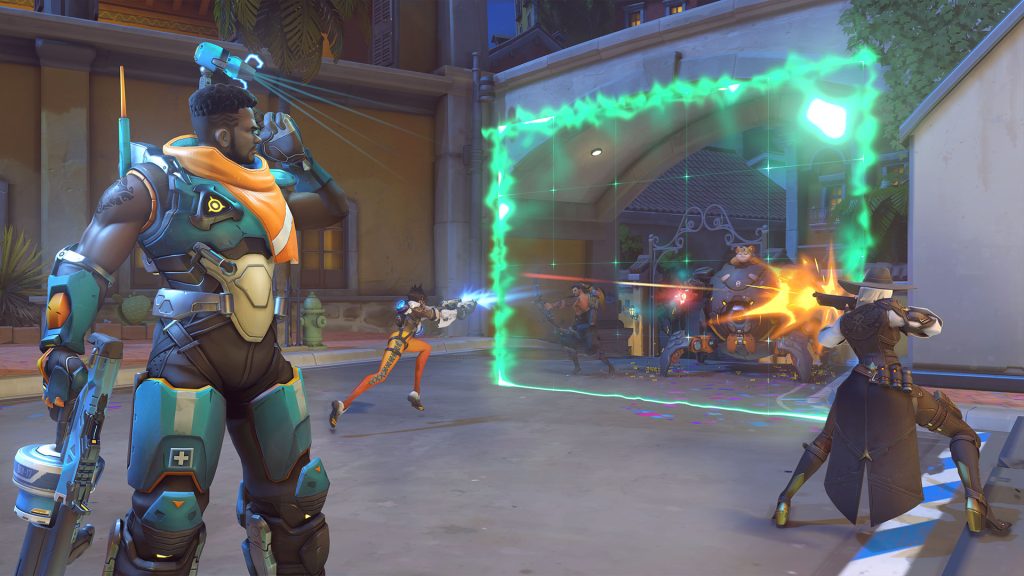
At the very nucleus of Overwatch 2’s transcendent ludological appeal lies its architectonic complexity—an elaborate, fractal network of heterogeneous agents (heroes) whose idiosyncratic abilities and roles instantiate a dynamic system of interlocking counterplays and cooperative synergies. Each hero’s mechanical and tactical ontology is meticulously calibrated through iterative balancing, fostering a Sisyphean cycle of meta-evolution in which players’ anticipatory cognition, adaptive heuristics, and executive motor functions synergize to generate emergent strategic phenomena.
The multifactorial interplay between offensive and defensive roles, tanking and healing functions, spatial control and temporal disruption, coalesces into a systemic gestalt wherein the aggregate is demonstrably greater than the sum of its parts. This dynamic facilitates a kaleidoscopic array of viable tactical configurations, necessitating a dialectical fusion of micro-executional prowess and macro-strategic coordination.
In contradistinction, Marvel Rivals’s ludological infrastructure adheres more rigidly to the ontological paradigms endemic to the fighting game genre. Here, dyadic combat sequences revolve primarily around rapid input execution, frame-specific timing, and rote mastery of character move sets. While this framework offers kinetic exhilaration and reflexive challenge, it lacks the systemic depth, role diversity, and inter-agent interdependence that hallmark Overwatch 2’s evolutionary meta.
The resultant epistemic divergence underscores Overwatch 2’s capacity to engender higher-order ludological complexity, positioning it as an exemplar of emergent multiplayer design.
II. The Aesthetic Semiotics of Immersive Environments and Technological Synergism
A salient dimension of Overwatch 2’s ascendancy pertains to its audiovisual semiotics and the confluence of artistic vision with technological innovation. The game’s visual architecture transcends mere ornamental function to become an integral component of gameplay. Spatial topologies—comprising architectural features, environmental hazards, verticality, and sightline manipulation—serve as critical tactical variables, demanding players’ acute spatial cognition and environmental literacy.
The chromatic vibrancy and textural verisimilitude construct a phenomenologically immersive ludic environment that fosters both affective resonance and strategic depth. Furthermore, Blizzard’s technological stewardship manifests through optimized netcode protocols, minimizing asynchronous latency and input delay, thereby preserving competitive integrity and experiential fluidity across heterogeneous hardware platforms.
By contrast, Marvel Rivals’s aesthetic lexicon, while stylistically consistent with the Marvel comic pantheon, remains comparatively static and circumscribed within the conventions of fighting games. The limited environmental dynamism and repetitive arena structures diminish spatial complexity and phenomenological immersion.
III. Sociocultural Ecosystems and Meta-Communal Resilience
The sociocultural dynamics underpinning Overwatch 2’s thriving community exemplify a complex adaptive system, wherein player agency, iterative developer feedback, competitive infrastructures, and seasonal content delivery mechanisms symbiotically interact. This ecosystem fosters not only emergent strategic diversity but also communal identity formation and sustained player investment.
Cross-platform matchmaking algorithms facilitate broad heterogeneity within the player base, cultivating inclusivity and cultural permeability. The resultant meta-communal vivacity manifests in both grassroots competitive scenes and professional esports circuits, as well as through fan-driven lore exegeses and performative co-creativity.
Conversely, Marvel Rivals suffers from comparatively diminished infrastructural support and a more constrained community scope, limiting its capacity for meta-evolutionary persistence and communal proliferation.
IV. Mythopoetic Stratification and Participatory Narrative Ontologies
In a domain often criticized for narrative superficiality, Overwatch 2 innovatively integrates a mythopoetic stratification through episodic cinematics, environmental storytelling, and transmedia narrative threads. This creates a diegetic tapestry wherein players’ ludic actions gain contextual and affective significance.
Emergent narratives arise organically from player interactions and competitive trajectories, engendering a participatory storytelling paradigm that amplifies emotional engagement and cultural resonance.
Marvel Rivals, while utilizing the Marvel mythos as a narrative backdrop, prioritizes kinetic immediacy over narrative integration, resulting in a more ornamental and less immersive storytelling framework.
V. Accessibility, Inclusivity, and Democratization of Competitive Play
Blizzard’s commitment to accessibility manifests through adaptive controls, customizable interfaces, and matchmaking paradigms designed to accommodate a wide demographic spectrum. Cross-platform compatibility further democratizes participation, dismantling hardware exclusivity barriers.
Marvel Rivals incorporates foundational accessibility but remains limited by platform constraints and less advanced matchmaking infrastructures.
VI. Emergent Ludic Ontologies and Metagame Evolutionary Dynamics
Overwatch 2’s facilitation of emergent gameplay phenomena—unpredictable and co-creative strategic interactions arising from complex systemic interplay—positions it as a dynamic cultural artifact. This ongoing meta-evolution fosters perpetual reinvention and relevance.
Marvel Rivals’s rigid frameworks curtail such phenomena, limiting meta-evolutionary scope.
VII. Onto-Historical Dialectics and Prognostications for Ludological Evolution
The evolutionary trajectory of interactive entertainment necessitates a synthesis of mechanical innovation, narrative profundity, and sociocultural engagement. Overwatch 2 epitomizes this synthesis, heralding a new ludological epoch.
Marvel Rivals, while commendable, remains ontologically circumscribed.
VIII. Epilogue: The Apotheosis of Digital Ludology and Cultural Artifact
The aggregate of mechanistic complexity, aesthetic virtuosity, community dynamics, narrative integration, and emergent complexity decisively situates Overwatch 2 as the apotheosis of contemporary multiplayer gaming, transcending Marvel Rivals in every critical dimension.